Search David's Blog

Thursday, January 30, 2014

Gods and Generals: A Novel of the Civil War - Characters

Book by Jeff Shaara, 1996
https://blogger.googleusercontent.com/img/b/R29vZ2xl/AVvXsEis_NF2tQYeQwNnCNrLvBCrib_Esz25_kMvFdPo6beveGX-bh0N5cvrkLcBnHrAh6Xw5FGLJ3HVZIxgBWrZ0rtD5RPK_RPR_jO3yByX1OpcdWs9rXB6uXcs-okr4RHtFlnbEGgSwgvV4F0/s1600/cover5.jpg
    [CHARACTERS]
    I've been pretty excited about reading this book for some time. Gods and Generals is a book by Jeff Shaara, who is actually the son of the author of The Killer Angels, by Michael Shaara. If you look to my previous posts, you'll notice I admired the book very much.
 
    Basically, the gist of Gods and Generals is that's it's a bit of a prelude to The Killer Angels, but contains its own thrilling plot itself. The same historical figures are focused on, plus a couple more. General Robert E. Lee, Thomas "Stonewall" Jackson, Winfield Scott Hancock, and Joshua Lawrence Chamberlain are the main focuses in the text. The book's title comes from its initial focus on the lives of these powerful men. Lee is the character chosen to start the book, with his return to Arlington. The man who normally catered his house while he was away at war, Custis, had died. Now Lee returns to his family on emergency leave, but is stricken with indecision. His love for his family, his love for his country, and his love for God all pull him in different directions.
    Additionally, Jackson is a major religious figure in the novel. Again, a man of war, yet similiarly a devout Christian. His struggle is also centered around his family (these 19th century people seemed to have a lot of family problems) as he had tried and failed (twice) to have a child with two different women, because "Ellie died in childbirth...the Junkins were still his family, but he had married again, to Anna Morrison...but he was not safe from the unspeakable, from the sad face of God, and stared hard ahead." (Shaara 21) Jackson's struggle as a father was similarly stifled not only by deaths of his children, but his duty as a military instructor.
 
    This was a shorter post, to my standards at least, but I'm not too far into the book yet. Gods and Generals is not over yet.

Thursday, January 16, 2014

Plot Against America - Theme

Book by Philip Roth, 2004
https://aulalibrary365.files.wordpress.com/2012/05/plot.jpg
[THEME]
    I keep jumping around with my books, I know. That's kind of what you get when you read more than one book at a time. Both The Plot Against America and Don't Turn Around are two good books that I seriously recommend, though, and they're different enough to read simultaneously.
   
    Focusing on the theme of The Plot Against America, it can be pretty easily gleaned. On a more general scale, any decent reader will draw the idea that perseverance is huge at this time for the Roth family: perseverance against the Republicans and perseverance against the Hitler ideas and perseverance against the internal conflicts of the trying times. The Republicans have already killed Walter Winchell. (who was, in fact, a real person; a radio gossip commentator and political figure, known for name-calling and slang in his writings) After Winchell's death, the power balance between Democrats and Republicans was thrown severely into the Republicans' favor. Additionally, Hitler's ideas were spread in America through Lindbergh, the close friend of Hitler and the President of the United States of America. These two factors and several other smaller life struggles for the Jewish Roth family left them fractured: a father and mother constantly bickering, a young protagonist left on his own with a friend he didn't like, and his older brother who seemed to have an allegiance to the opposite political faction.
    But perseverance.
    The theological meaning is the continuation with grace to eternal salvation. If the Roth family, who are heavily Jewish, remember, continue to live together, to continue to exist in hostile territory which they call home, they might survive and be known not as a family but as survivors. The oppressed. The beaten-down. The lesser class. The people who were stripped of their freedom and their public favors and their status and they lived. The theme of The Plot Against America is undoubtedly: Resiliency through trying times leads to a greater compensation. If the Roth family can endure what plagues them now, they will be brought to the light as being those who were "right", those who were challenged for their beliefs and they won.
    That wraps up this post. More The Plot Against America and other books will be featured in future posts.

Saturday, January 11, 2014

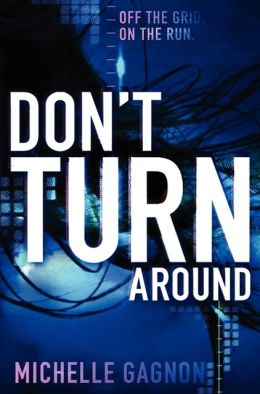
Don't Turn Around - Characters: Noa

Book by Michelle Gagnon, 2013
http://img2.imagesbn.com/p/9780062102911_p0_v2_s260x420.JPG
[CHARACTERS]
    If you have been paying attention to the books I've done, then you'd know that Don't Turn Around by Michelle Gagnon was actually the first book I'd done. It was only a brief overview but I have read it again since then and we're taking a closer look at the characters.
    First: the obvious choice, the protagonist, Noa. Basically, stereotypical realistic-fiction modern style here. Noa is an amnesiac, or somewhat so, given that the book starts off with [again] a stereotypical wake-up-on-a-cot-with-no-recent-memory. The past few weeks are gone for Noa Torson. Even better, it's in a cold hospital with no apparent identity, "This wasn't like any hospital she'd ever seen [...] Looking down, Noa discovered that she was wearing a cloth gown, but there was no hospital name stamped on it. Not juvie, and not an official hospital." (Gagnon 2) This, along with the other first 5 pages, is all the beginning setting-analytic jargon found in virtually every novel you will ever read. 
    As you will notice, much of Noa Torson is characterized within the first ten pages. It can be noted that she obviously has some degree of sarcasm or carries an ironic mood, "'It won't work' he said. [...] He dropped hard, knocking over boxes on the way down. He didn't get back up. 'I hate negativity' she muttered." (Gagnon 6) Noa Torson seems to have this dry wit throughout the story, this being only one example. Hatred and negativity are synonyms, and to proclaim your own hatred of negative behavior is irony.
    Another characteristic of Noa apparent in the first few pages is her adherence to violence. In response to seeing the first people since waking from amnesia, she adopts an aggressive answer to the situation: "In one smooth motion, Noa scooped the scalpel off the tray and pressed it against the side of his neck. [...] she said firmly, 'or I'm going to slit your throat.'" (Gagnon 4) This overly aggressive behavior is Noa's first response to the strange situation she's found herself in. 

    This is the beginning of the character analysis for Noa, and more is to follow.

Thursday, December 12, 2013

The Plot Against America - Characters

Book by Philip Roth, 2004

https://aulalibrary365.files.wordpress.com/2012/05/plot.jpg
[CHARACTERS]

    The Plot Against America, by Philip Roth, focuses on the lives of the oppressed Jewish community in the alternate version of 1940's American history. Chiefly, the story centers itself around the protagonist, Philip Roth. (it is assumed this is the younger version of the author) Here, however, we focus on his father, Herman.
    Herman Roth is a faithful Jewish American. He openly broadcasts his Jewish beliefs and shows his disdain for anything else. In the time segment of November 1940 - June 1941 titled "Loudmouth Jew", the story follows up on the impact of Hitlerite ideas and Lindbergh's inauguration as President. Previously, Herman's son Philip was affected by the anti-Semitism, "[...] I fell out of bed and woke up on the floor, this time screaming. Yosemite in California, Grand Canyon in Arizona, Mesa Verde in Colorado, Crater Lake in Oregon, Acadia in Maine, Mount Rainier in Washington, Yellowstone in Wyoming, Zion in Utah, Glacier in Montana, the Great Smoky Mountains in Tennessee -- and across the face of each, across the cliffs, the woods, the rivers, the peaks, the geyser, the gorges, the granite coastline, across the deep blue water and the high waterfalls, across everything in America that was the bluest and the greenest and the whitest and to be preserved forever in these pristine reservations, was printed a black swastika." (Roth 43) This was the anti-Semitism nightmare that Philip had, after Lindbergh was inaugurated. This is also the same attitude that spread to Herman Roth.
    Herman Roth, the Loudmouth Jew, is proud of his religious stance and when this religious threat came across America, he defended himself and his family. After the Roth family visited the Lincoln Memorial, they overheard an elderly woman compare Lincoln to Lindbergh, in which Herman clearly and publicly displayed his disgust. Afterwards, Herman was left with the feeling of satisfaction of making his point clear, and it was heard, "[...] refer to my father as 'a loudmouth Jew', followed a moment later by the elderly lady declaring, 'I'd give anything to slap his face.'" (Roth 65) Herman afterwards was left in a similarly rebellious mood of declaring his hatred for Lindbergh, who supports Hitler and anti-Semitism.
 
    A different character, Seldon, is the forced friend of Philip's. Seldon is the nieghbors' only son, living now only with his mother, as his father killed himself shortly after Lindbergh became President. Seldon is a very lonely kid, emphasized by his love for chess, and his fractured family. Philip despises Seldon, wishing he would stop following him around.
    Seldon is only a child, and his perceptions of the world are limited. He clings tightly to what little he knows, seeming clueless at times or annoying to Philip, a few years his senior. For example, Seldon's behavior was more clingy after the suicide of his father, "My aversion of him had grown stronger, and at the end of the day, I hid back at school when I knew he was out front waiting to walk me home [...] and there would be Seldon at my heels, acting as if he turned up by accident." (Roth 189) Here, Seldon has become more reliant on Philip, to the point of irritating him with his childish antics.
    Additionally, Seldon's clueless side shows later after he'd been relocated by the government. Moments after the Jewish radical Winchell had been assassinated by unreasonable Republicans, the Roth family made a call to the family of Seldon's. Only Seldon was home at the time, and his responses are a frustration to the Roths, as they seemed forgetful and reflected inadequacy, "'[Mrs. Roth] No. Just eat your snack---' '[I think I've had enough Fig Newtons now, but thanks anyway.' '[Mrs. Roth] Goodbye, Seldon' '[Seldon] I like Fig Newtons, though.'" (Roth 280) With this, Seldon has displayed himself as a youthful, innocent boy with a gram of knowledge and less so of awareness. This is only one of multiple examples of his childishness. Seldon is only a minor character, but plays a role in the fractured, life-changing childhood of Philip Roth.

Wednesday, November 20, 2013

The Plot Against America - Analysis

Book by Philip Roth, 2004

https://aulalibrary365.files.wordpress.com/2012/05/plot.jpg
    [ANALYSIS]
    The Plot Against America, by Philip Roth, is centered around a seven-year-old boy who is assumed to be the a younger version of the author, as they go by the same name. This young Philip Roth is an American Jew, in the 1940's. This, however, is an alternate form of history. After Roosevelt is finished with his second term, the Republicans elect the young, brave, and bright Charles A. Lindbergh to be president. This is the same Lindbergh who flew the Spirit of St. Louis.
    The book's chapters are set chronologically, each chapter longer than a normal chapter, as they are the measure of usually two to six months worth of material. The content is split between focusing on the Roth family and their struggles as a Jewish family, and the political aspect of the book, the fact that Lindbergh openly supported Hitler, which divides the whole of America. With this, the author glorifies all Jewish folk and the Democrats, and essentially tears down the 1940's versions of all Catholics and Republicans, both of which are supporting of Hitler in this time. As I'm basically halfway through the book, the Roth family has so far seen horrors in their time. Philip's cousin Alvin has gone to fight Hitler in Canada, and come back without one leg. Their father of the family next door killed himself out of despair, not only because the father was a Jew, he had lung cancer and was essentially disabled. His days were marked to him anyways, and as Lindbergh took over America, all hope was lost.
    This alternate history, the change of one person's role, drastically makes this book different from real history. A man named Walter Winchell, a Jewish Democrat who was originally a radio host (and later fired by hateful Republicans) took up candidacy for the next term of presidency. This inspired riots, called the Winchell riots, which led to politically-blinded, unreasonable Republicans making frequent attempts on his life. America was divided thoroughly, more so than in real history, due to a single man, Lindbergh, and his plans for passing the Hitlerites' ideas into America.
 
    The following link is to Lindbergh's real history, one not as President:

Sunday, October 20, 2013

WWZ - Book Recommendation

Book by Max Brooks, 2006
http://blog.pshares.org/files/2013/06/WorldWarZ_200-s6-c30.jpg


    [BOOK RECOMMENDATION]
    This book, despite being a dystopian / zombie book, is a deep, intricately-written novel. The amount of detail put into it is astonishing, along with the research Brooks apparently did, describing cultural references and specifics that only an expert would know. The book covers 23 different characters, though some are repeated, like the Chicagoan soldier Todd Wainio, who appeared the most in the book: four times. This tally of 23 doesn't count the Interviewer, who has a unique personality, bringing in a little bit of dry wit to the seriousness of the book. The book contains more than its fair share of expletives and graphic descriptions, though these are associated with certain characters, giving each their own personality and view on life. 

    The layout of the book is completely an interview format, giving a very special tone of both professionalism and casualness to the plot. The book, regardless, gives an easy-flowing story-line by having the characters talk about different aspects, areas, and attitudes specific to their location and upbringing, and all the while keeping a clear, chronological order to it. The book is fairly easy to read, offering challenges sporadically throughout the text, though I found the story refreshingly simple to read regardless. 

    The story is essentially starts with the Interviewer reporting his complaints to his boss about the story of the Zombie War, how the report they gave was all facts and figures, without human emotion and personal opinion. He is advised to make a book from precisely what he has - the interviews. The story expands on the cause of the uprisings, the initial handling, the failures, the panic, the switch from white to blue-collar dominance, the survival of the common people, the second handling, and the finale. Ultimately, I'd rate this a 9/10, and a brilliant book.

Wednesday, October 16, 2013

WWZ - Theme and Summary

Book by Max Brooks, 2006

http://blog.pshares.org/files/2013/06/WorldWarZ_200-s6-c30.jpg

 
[THEME AND SUMMARY] 
    Yes, of all genres, the zombie book actually has a theme. And don't think it's something about the best way to survive a zombie apocalypse, because it's not. This book is amazing because of the thought, research, and incredible characterization that has been compiled into it. The theme, in my opinion, is something along the lines of: Trust and rationality are what keeps the unity, as humans become nothing without it. Explanation: The people of Earth, encountered with the zombie breakouts, would often become isolated cities left to their own devices. Some did well. Other fell apart, succumbing to the plagues of greed, insanity, and the loss of will. One example of the things that constantly threatened the people was: "ADS, that was my enemy: Asymptomatic Demise Syndrome, or, Apocalyptic Despair Syndrome, depending on who you were talking to... no one understood what was happening at first... some were in perfect health. They simply go to sleep one night and not wake up the next morning. The problem was physiological, a case of just giving up, not wanting to see tomorrow because you know it would only bring more suffering." (Brooks 159) ADS was a cause in some of the place hit harder by the loss of need for white-collar workers. People weren't prepared for a sudden shift in their comfortable way of life, and simply died, not committing suicide, not succumbing to injuries nor diseases, simply not wanting to live anymore. Like Princess Amidala from Star Wars: Revenge of the Sith, when she died because she gave up. Some people handled things unlike the prewar times yet succeeded due to different circumstances, further proving my theme, is: "Yes, there was the fear of pain - the lash, the cane - but all of that paled back when compared to public humiliation. People were terrified of having their crimes exposed." (Brooks 149) This person, nicknamed "The Whacko", was a VP during the war, and was discussing the forms of punishment used. He said that people thought is was barbaric at first, but realized the logic behind it. People were more desperate, and needed more severe punishment to keep everyone in line and not committing crimes because they thought it would be their last days.

    The theme does reflect some real life issues. For one, modern problems like the government shutdown is a connection to the theme. Trust and rationality are important. Excuse me for defending my political view, but the Republicans acted irrationally, very irrationally, at a single law, shutting down the entire government because of it. They were mistrustful, thinking that the law was not worthy of being in place, not trusting the good it could bring. Sure, there are some things the Democrats got wrong too, as they are also guilty of mistrust and irrationality, and what does this whole predicament bring to us? A debt ceiling, the impossibility of reverence towards our great nation's history, and more and more childish, pathetic actions and feelings that have kept our country in a horrible gridlock, a stasis brought about only by the reluctance to trust one another and the actions of each other, additionally the hasty, short-sighted, and disgustingly childish reactions that both sides are known to do. This real life and frankly important issue is reflected with my theme for World War Z.

    The story utilizes the zombies to show the people of the Earth how the past ways of life are the better ways of life, which is similiar to the age Age of Romanticism, which idolized past lives. The zombies created such an unusual enemy that none of the modern attempts at persuasion through force (shock and awe) will affect them. Similarly, modern weapons and techniques are pretty much pointless, "It was a monument to American technical prowess...and in this war, that prowess counted for [expletive deleted]. That must have been frustrating. Frustrating? Do you know what it feels like to be told that the one goal [...] is considered 'strategically invalid'? Would you say this is a common feeling? Let me put it this way; the Russian army wasn't the only service to be decimated by their own government [...] Some DeStRes 'experts' had determined that our resource-to-kill ratio, our RKR, was the most lopsided of all the branches [...] Now we were told that the price of one JSOW kit [...] could pay for a platoon of infantry pukes who could smoke a thousand times as many Gs." (Brown 168-9) This person, Colonel Christina Eliopolis, used to be the pilot of an FA-22, and claimed it could "outfly and outfight God and all his angels." (Brown 168) However, this technology proved to be not worth much against a zombie who could physiologically not be scared, and wouldn't die without destruction of the brain. The army must convert to older methods of warfare to fight.